Ancient Messini isn’t a scattered fragment of an ancient city — it’s a nearly complete polis. These are the parts you shouldn’t miss, and why they’re worth the walk.
The city walls
Messini’s defensive walls rank among the best preserved in all of Greece, with gates and towers still clearly recognisable. They give a direct sense of how seriously the newly-freed city took its own defence, right after breaking from Sparta.
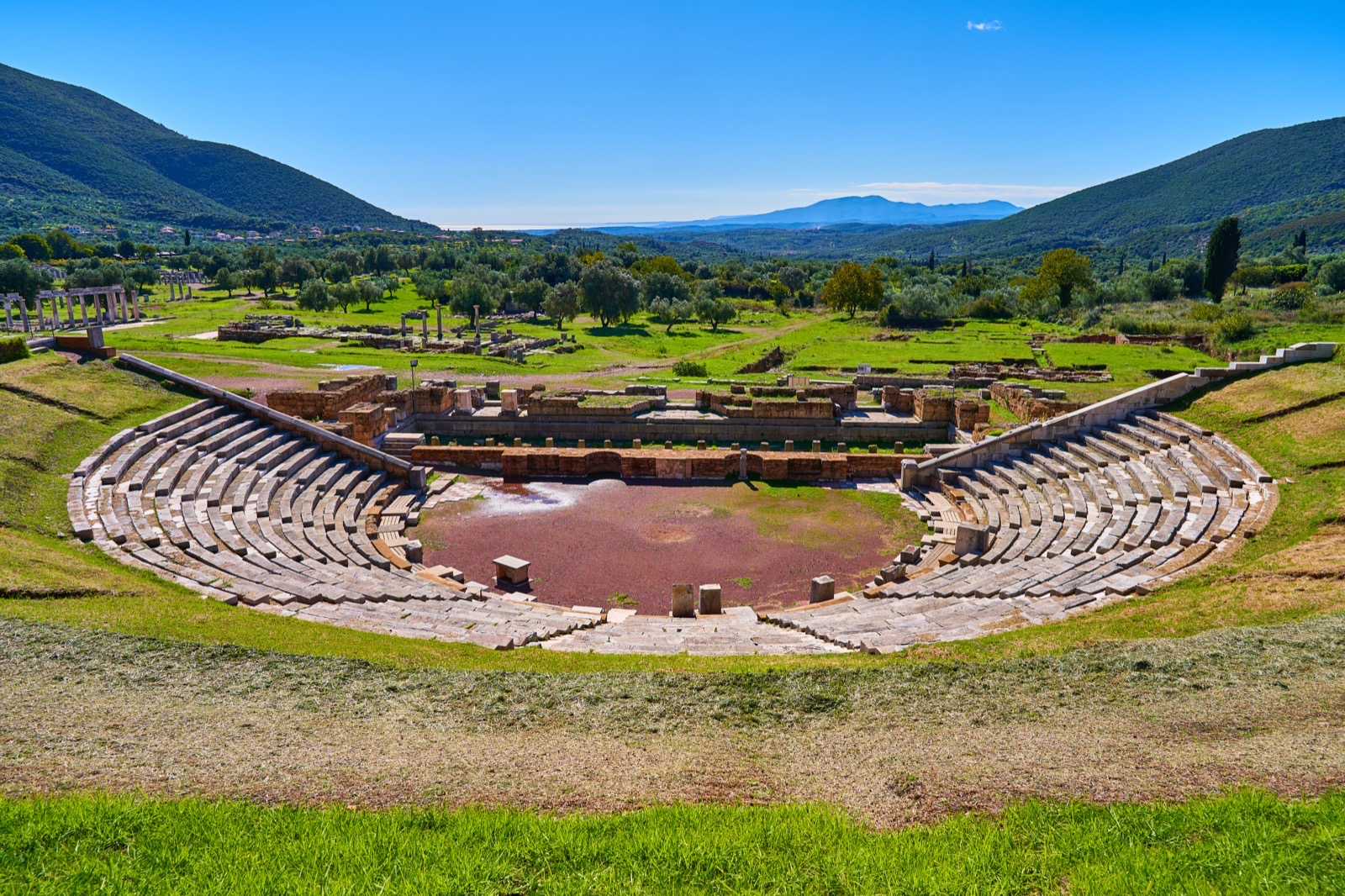
The theatre
One of the best-preserved theatres on the Greek mainland. The shape and seating rows are easy to make out, and it’s not hard to picture performances drawing crowds here for centuries.
The agora
The ancient marketplace formed the beating heart of public life in Messini: trade, meeting, and politics all came together here. The sheer size of the agora shows how central this function was to the city.
The Asclepeion
A large sanctuary dedicated to Asclepius, the god of medicine. The complex is bigger and more complete than you’d expect from a medical sanctuary, showing how central health and religion were to daily life in the city.
The stadium
One of the most complete ancient stadiums still standing. Walk the track yourself and you immediately feel the scale on which athletic events were held here.
The archaeological museum
The museum in the village of Mavromati displays the most significant finds from the excavations and gives context to what you see on site. Visiting beforehand (30 to 45 minutes) makes the rest of the site much easier to understand.
Excavations are ongoing
Systematic excavations began back in 1895, and since 1986 archaeologist Petros Themelis and his team have led the research. Digging still continues — what you see today isn’t the full story.
For practical details on tickets and the best route, see our visitor guide. Back to the full overview: Ancient Messini.
Book a tour
Want to explore Kalamata and Messinia with a local guide? Check out our small-group tours.
View all tours